The show space for Dior Women Spring–Summer 2026 was designed by Luca Guadagnino and Stefano Baisi for Jonathan Anderson’s first womenswear collection for the House. The project explored Dior’s history through architecture, film and the experience of the audience. An inverted pyramid became the central element of the space and the projection surface for a film commissioned from Adam Curtis. The architecture and the film were developed in parallel, creating the sequence that introduced the collection and marked the beginning of a new chapter for Dior.
Entering the House of Dior
The project began with conversations with Jonathan Anderson about the experience of his first women’s show for Dior. The history of the House carried a strong sense of responsibility, and this became one of the starting points for the design. Adam Curtis’s film opened with the sentence, “How dare you enter the House of Dior.” The line expressed the weight of entering an institution with such a long and important history and introduced a sense of expectation and intimidation. This idea shaped the atmosphere of the space. The show was approached as a temporary architecture with the character of an institution or museum. The audience entered an environment conceived around contemplation, concentration and the awareness of Dior’s past.The architecture became part of the transition between this history and Jonathan Anderson’s first women’s collection for the House.
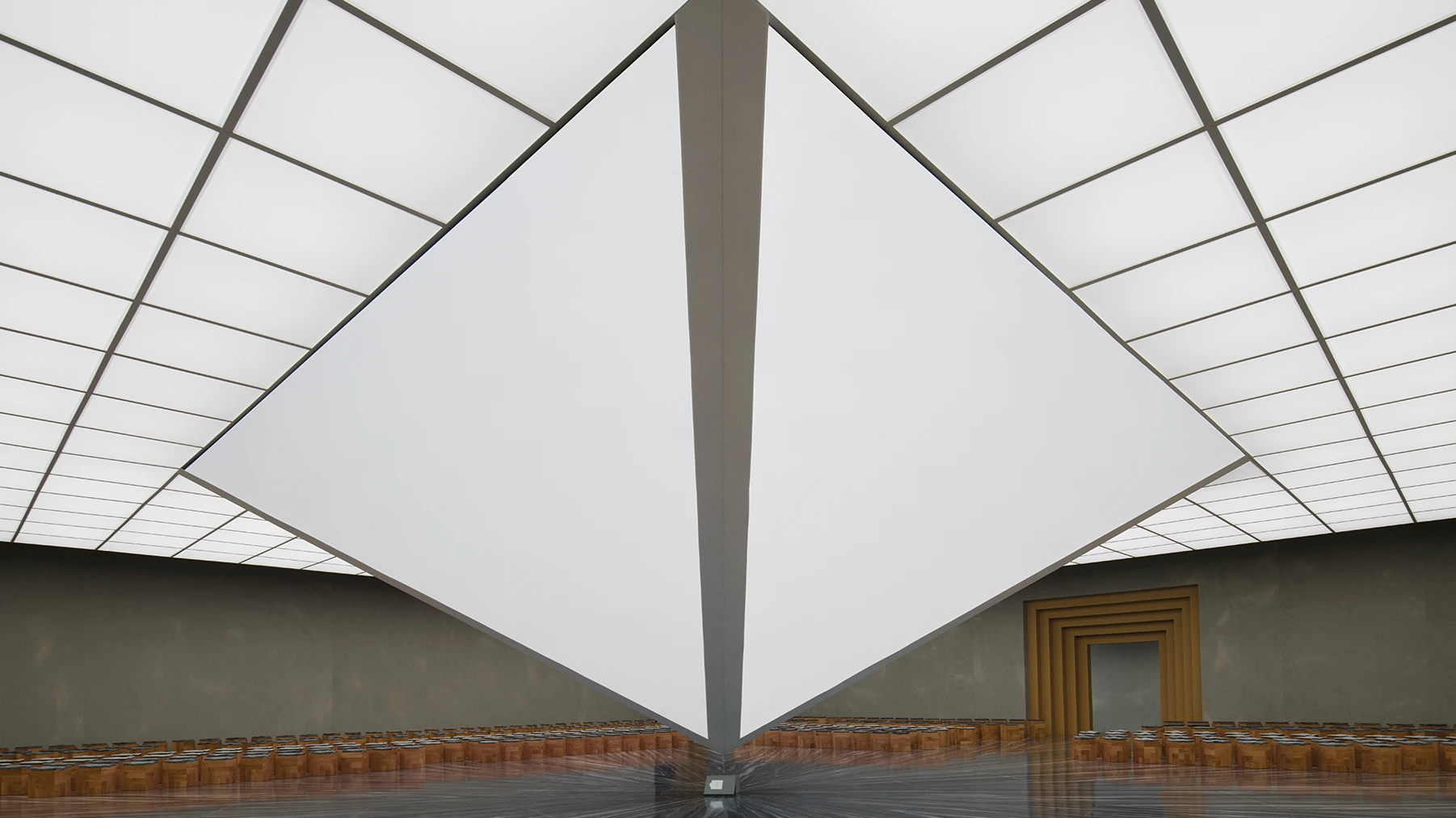
Image courtesy of Dior / Bureau Betak
Architectural references
Jonathan’s interest in Paris, the Louvre and its inverted pyramid provided the starting point for the architecture. The research then developed through the work of Louis Kahn and Carlo Scarpa. The Yale Center for British Art became a reference for spatial rigor and clarity, while the Brion Cemetery informed the treatment of materials, details and architectural relationships. These references contributed to the character of the room and to the development of the inverted pyramid as a large suspended structure occupying its centre. Its scale established the spatial order of the show and gave the temporary construction a sense of permanence and gravity.
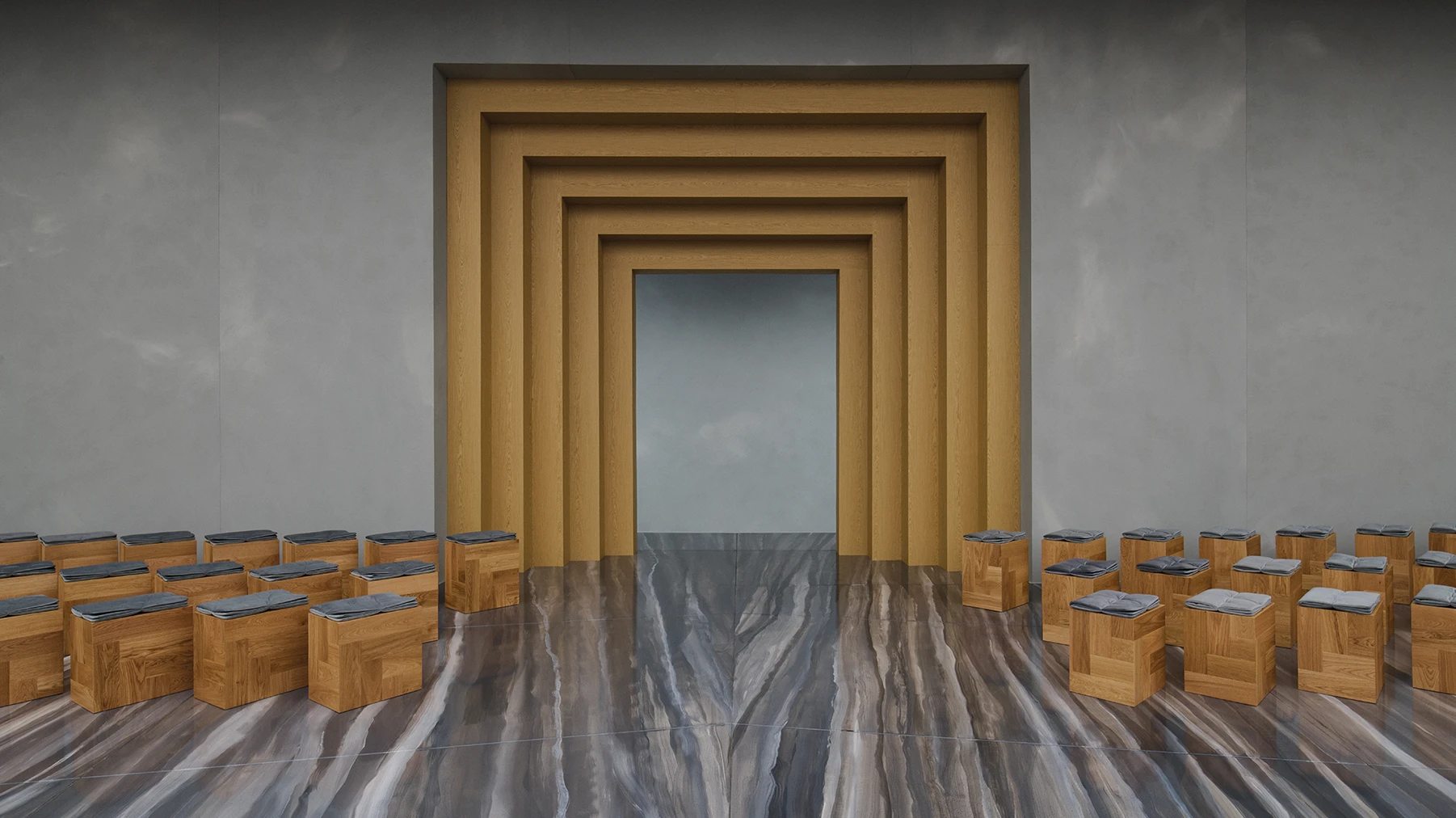
Image courtesy of Dior / Bureau Betak
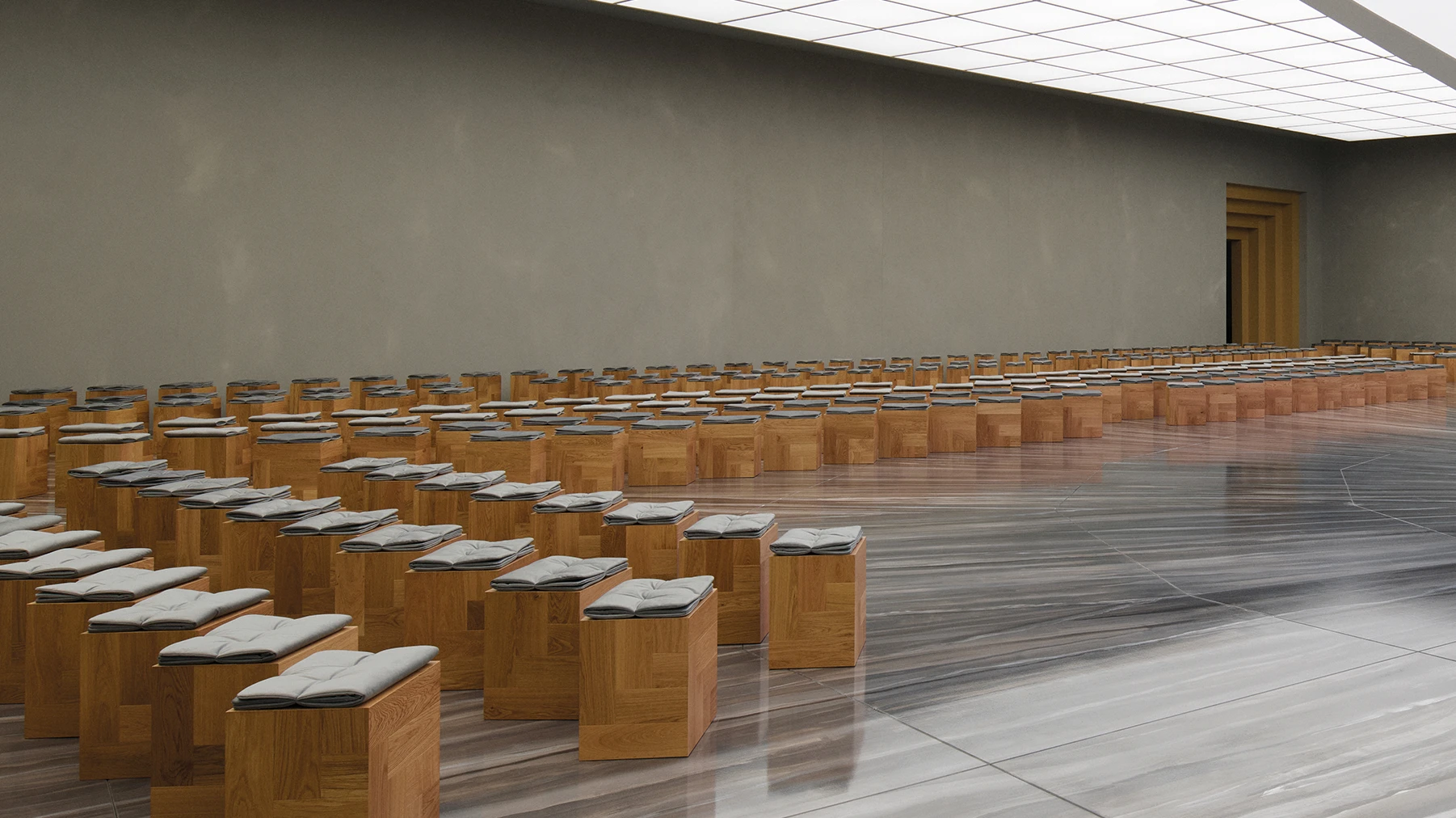
Image courtesy of Dior / Bureau Betak
Film and Space
The film and the architecture developed simultaneously, through a continuous exchange during the design process. The inverted pyramid served as the projection surface, directly connecting the moving image with the physical space. Adam Curtis assembled archival images from Dior’s history with fragments from horror cinema, using montage to create associations and shifts in tone. The projection occupied the pyramid at an architectural scale and became part of the audience’s experience before the collection appeared. The geometry of the structure, the dimensions of the image and the position of the audience were considered together throughout the development of the project. The film established the opening sequence of the show and prepared the transition to the first look.
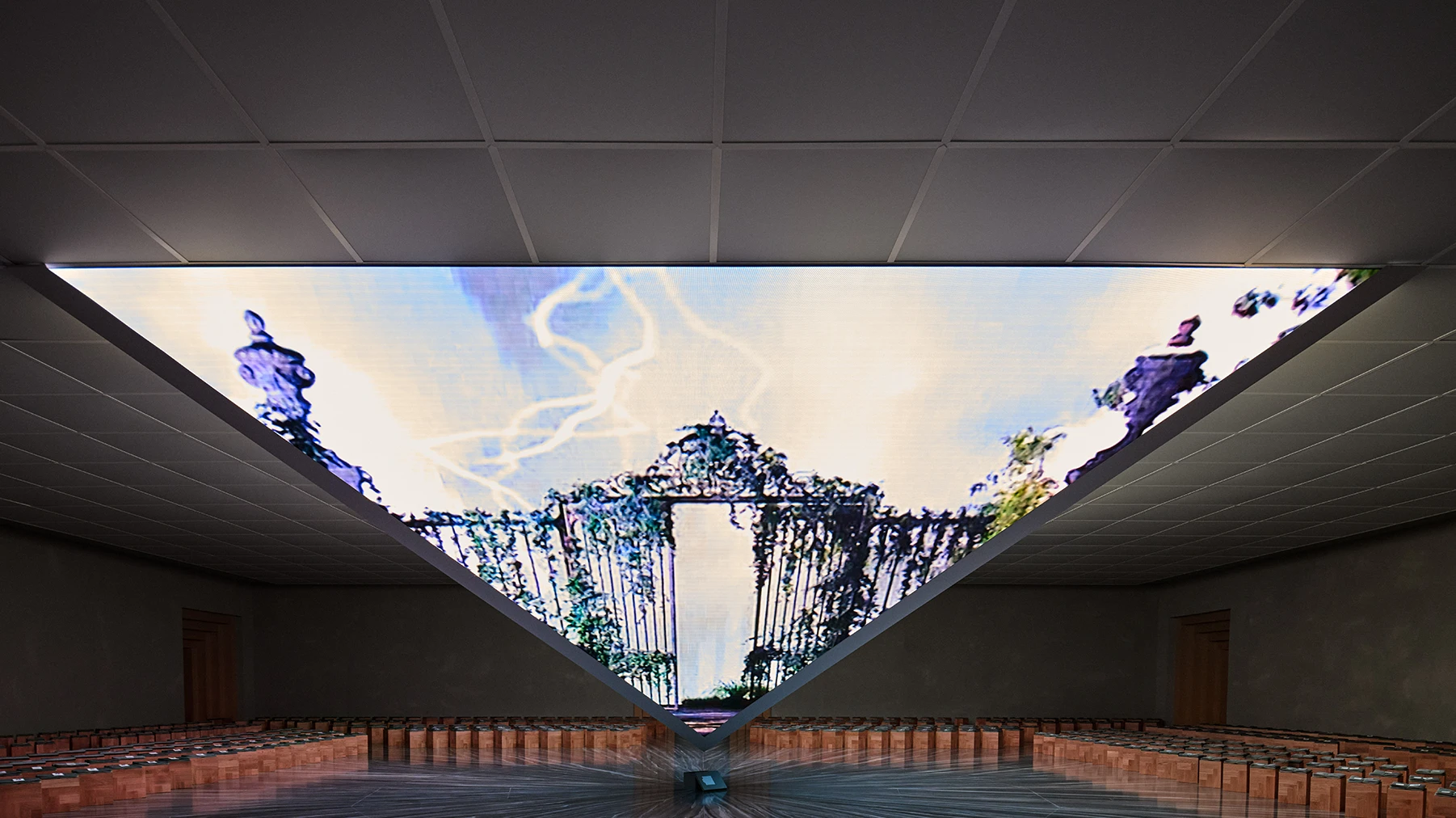
Image courtesy of Dior / Bureau Betak
The Tranformation
An iconic Dior shoe box was positioned beneath the inverted pyramid and became the final element of the opening sequence. At the end of the film, the pyramid was designed to collapse into the box, which would then close completely. The projection disappeared together with the structure, creating a physical transition between the film and the presentation of the collection. The gesture condensed the opening sequence into a single transformation, marking the transition from Dior’s history to Jonathan Anderson’s first women’s collection for the House.
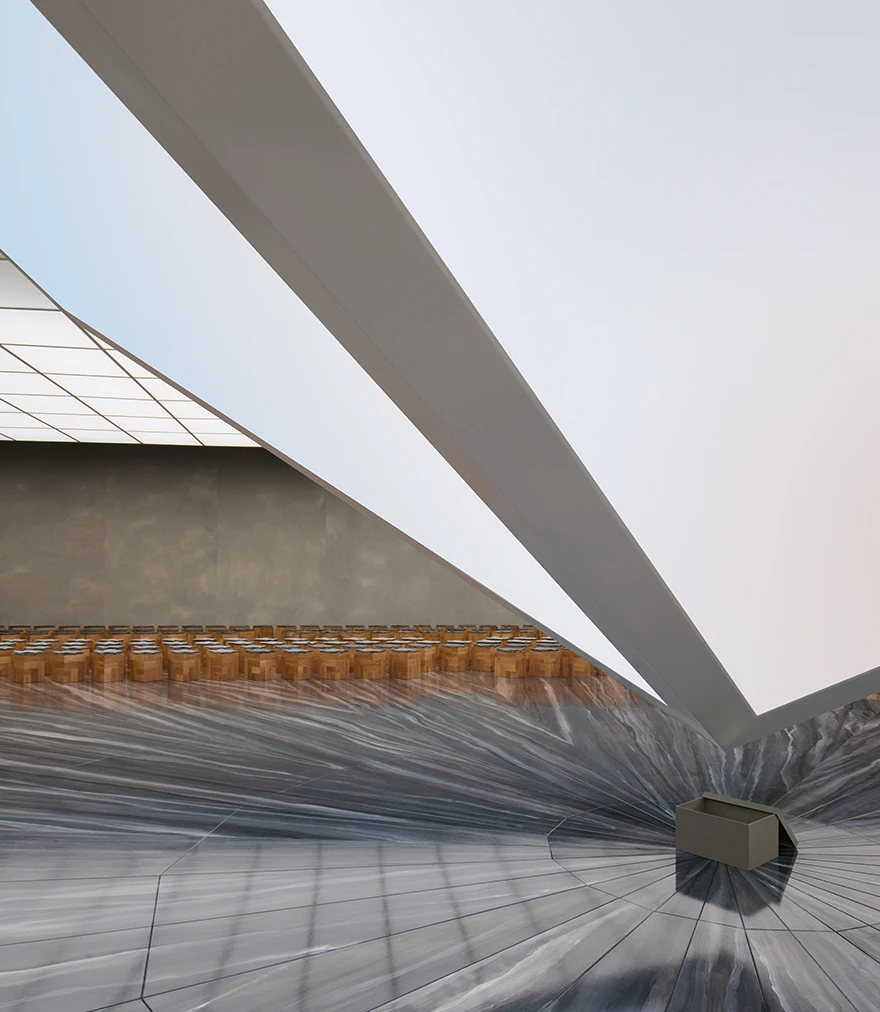
Image courtesy of Dior / Bureau Betak
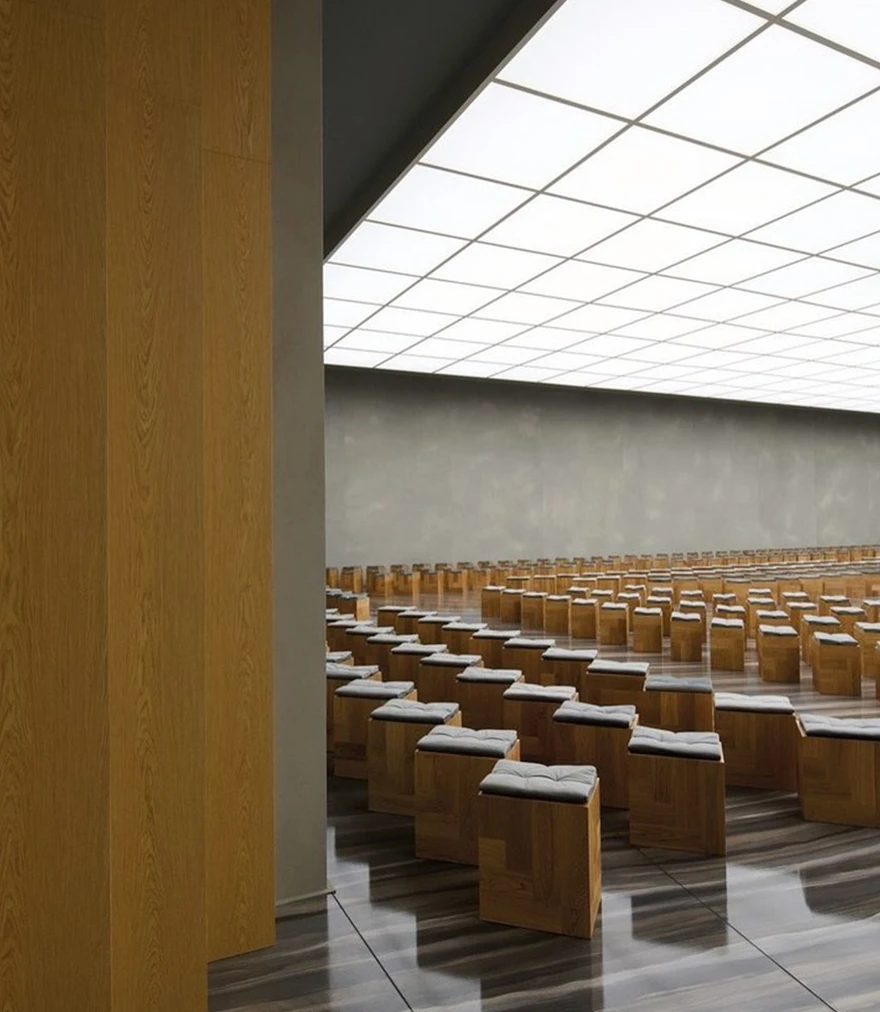
Image courtesy of Dior / Bureau Betak
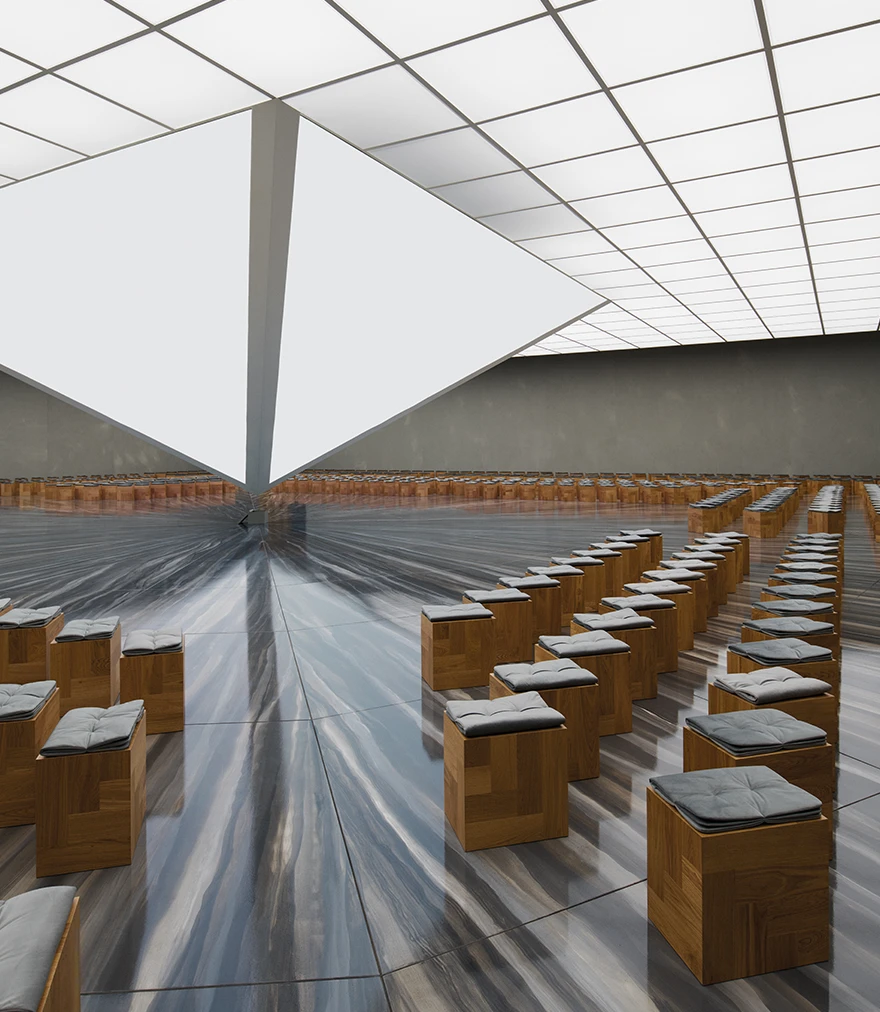
Image courtesy of Dior / Bureau Betak